Showing posts with label Missile. Show all posts

PT. Lundin (North Sea Boats) Introduces 63m FMPV Trimaran - Stealth Fast Missile Patrol Vessel

on Thursday, November 29, 2012

28 November 2012

Export version of the 63 meters FMPV Trimaran (photo : Navy Recognition)

The Fast Missile Patrol Vessel (FMPV) Trimaran was designed by North Sea Boats, an Indonesia based shipyard, with input from New Zealand and Swedish engineers as well as the Indonesian Navy. The vessel employs a modern “Wave Piercing” trimaran design and some "stealth" characteristics.

An export version of the 63 meters FMPV Trimaran is available. North Sea Boats partnered with SAAB for this version, as a consequence most weapons and sub-systems are provided by the Swedish Defence group as shown in the picture below which was displayed on SAAB booth during Indodefence 2012.

FMPV Trimaran in export configuration would come with:
» Saab RBS15 Mk3 anti-ship missiles
» BAE Systems Bofors 40Mk4 40mm main gun
» Saab Sea Giraffe LT radar
» Saab CEROS 200 radar and optronic tracking system
» Saab 9LV Combat management system

“Wave Piercing” trimaran design: This allows the vessel to cut-through waves rather than rise up and over them, and the increased beam provides inherent stability. This combination of features reduces both pitching and rolling, creating a stable weapons platform, and enabling the vessel to comfortably and safely maintain higher average speeds in adverse conditions.

The FMPV has “Stealth” design characteristics, and incorporate features that minimise detection by reducing Radar, Infra-Red, Acoustic and Magnetic signatures. Stealth properties are further improved as there are no reverse-angle bow overhangs to reflect radar signals, as seen on conventional hull forms. Weaponry, including missiles and naval guns, and the ships 11 m high-speed RHIB, are discreetly concealed or shaped to meld into the superstructure profile.

Construction is from strong and highly durable, lightweight composite carbon fibre sandwich, utilising vinylester modified epoxy resin and the vacuum resin infusion process. Thus ensuring improved fuel efficiency, and reduced operational, maintenance, and life cycle costs.


Missions :
» Patrol in international and territorial waters
» Patrol close to shores, in shallow waters
» Deployement of special forces
» Air and surface surveillance
» Intelligence gathering
» Disaster relief

Weapons
» 8x CASIC C-704 anti-ship missiles
» Chinese 6 barrelled gatling type gun

Sensors, Electronics
Electronic, CMS, Navigation Systems: Unknown type, Chinese origin
Communication Systems: Unknown type, Chinese origin
Engines/Propulsion/PowerEngine: 4x 1800 hp
Propulsion : MJP Waterjets

Specifications
Type : Fast Missile Patrol Vessel
Crew : 23 (+ 7 Special Forces)
Operators : Indonesian navy
Speeds:  sprint 30+ kts,  cruising : 22 kts
Range : 2000+ nm @ 16 kts
Endurance : n/a
Designer / Builder : PT. Lundin (North Sea Boats)
Displacement : n/a
Propulsion: MJP Waterjets
Dimensions
Length : 63 m
Beam : 16 m
Maximum Draft : 1.20 m


View the Original article

Indonesia has Requested Possible Purchased of 180 Block I Javelin Missile

on Friday, November 23, 2012

20 November 2012

Javelin block I portable anti tank missile (photo : Defense Update)

WASHINGTON – The Defense Security Cooperation Agency notified Congress November 15 of a possible Foreign Military Sale to the Government of Indonesia for 180 Block I Javelin Missiles and associated equipment, parts, training and logistical support for an estimated cost of $60 million.

The Government of Indonesia has requested a possible purchase of 180 Block I Javelin Missiles, 25 Command Launch Units (CLU), Missile Simulation Rounds (MSR), Battery Coolant Units (BCU), Enhanced Basic Skills Trainer, Weapon Effects Simulator, batteries, battery chargers, support equipment, spare and repair parts, personnel training and training equipment, publications and technical data, U.S. Government and contractor technical assistance and other related logistics support. The estimated cost is $60 million.

This proposed sale will contribute to the foreign policy and national security of the United States by helping to improve the security of a friendly country which has been, and continues to be, an important force for the political stability and economic progress in Southeast Asia.

The proposed sale provides Indonesia with assets vital to protect its sovereign territory and deter potential threats. The acquisition of the Javelin system is part of the Indonesia Army’s overall military modernization program. The proposed sale will foster continued cooperation between the U.S. and Indonesia, making Indonesia a more valuable regional partner in an important area of the world.

The proposed sale of the missiles and support will not alter the basic military balance in the region.

The principal contractors will be Raytheon/Lockheed Martin Javelin Joint Venture (JJV) in Tucson, Arizona and Orlando, Florida. There are no known offset agreements proposed in connection with this potential sale.

Implementation of this proposed sale will not require the assignment of any additional U.S. Government or contractor representatives to Indonesia.

There will be no adverse impact on U.S. defense readiness as a result of this proposed sale.

This notice of a potential sale is required by law and does not mean the sale has been concluded.


View the Original article

China, Indonesia Begin Missile Talks

on Monday, July 30, 2012

28 Juli 2012

Phase 1 is on semi-knocked down production while Phase 2 is on completely-knocked down production.  A proposal for a Phase 3 on research and development is already on the table although the focus is currently on the first two phases. (photo : ifeng)

China and Indonesia have started talks on the ambitious local production of C-705 anti-ship missiles as part of Indonesia’s efforts to achieve independence in weapons production.

The defense cooperation reflects strengthening ties between both countries amid heightening tension in the South China Sea involving China and a number of Indonesia’s ASEAN neighbors.

Defense Ministry chief spokesman Brig. Gen. Hartind Asrin said that the initial talks were conducted during the first China-Indonesia defense industry cooperation meeting held in Jakarta on Wednesday.

The ministry’s defense potential director general Pos M. Hutabarat hosted the Chinese delegation which was led by Liu Yunfeng, a deputy director general at the Chinese State Administration for Science, Technology and Industry for National Defense (SASTIND).

“The meeting discussed various efforts to improve cooperation between the defense industries of both countries,” Hartind said on Thursday. “We’ve already prepared an area for the [missile] production site that faces the open sea for trials.”

Hartind said the C-705 had a range of 120 kilometers.

He said that the Indonesian Navy had successfully test-fired the C-705 missiles in the Sunda Strait.

“China has also offered to donate weapons systems that Indonesia might need,” he added.

A source said that Indonesia was expected to reply to Phase 1 of the missile proposal at the end of August and Phase 2 one month later. A contract is expected to be signed in 2013.

Phase 1 is on semi-knocked down production while Phase 2 is on completely-knocked down production.

A proposal for a Phase 3 on research and development is already on the table although the focus is currently on the first two phases.

Aside from the missile production, a number of Indonesian Army Special Force Command (Kopassus) members recently conducted the second “Sharp Knife” joint exercise with Chinese Special Forces operatives earlier this month in Jinan, Shandong, China.

China has also offered to train 10 pilots from the Indonesian Air Force to train using a Sukhoi simulator in China.

Commenting on the defense cooperation, defense expert Andi  Widjajanto said the industrial cooperation was solely to gain access to more advanced technology.

“However, it will take a long time for us to be independent in the defense industry, perhaps after 2024. This is the reason Indonesia builds partnerships with many countries that possess modern military technologies,” he said. “This is also why we require partner countries to transfer their technologies to us in any agreement we sign with them.”

Andi added that there were two goals in terms of the partnership: to access advanced rocket technology, and to collaborate in upholding maritime security, which began when President Susilo Bambang Yudhoyono signed an agreement in March during a state visit to Beijing.

“I don’t believe it has anything to do with conflicts in the South China Sea,” he stressed.

Meanwhile, chairman of the House of Representatives’ Commission I on defense issues, Mahfudz Shiddiq, said such global partnerships in the defense industry were designed to develop Indonesia’s own industry.

“We have allocated Rp 150 trillion [US$15.8 billion] to modernize our weapons-defense system from 2010 to 2014. It would be wasteful paying such a huge amount to foreign defense industries without any attempt to improve our own,” he said.

“Therefore, we require partner countries to transfer their military technologies in the hope that they will gradually improve our own technologies.”

He added that the partnership with China was due to its advanced military technologies in fields such as rocketry. “This is not political, even though others might link the partnership to political issues, for example the South China Sea disputes,” Machfudz said.

Indonesia already cooperates on weapons production with several other countries including South Korea to build jet fighters and submarines, the Netherlands to build frigates and Spain to build medium transport aircraft.


View the Original article

Lockheed Martin Receives Contracts Worth $218 Million for Demonstration of Second Round in Future US LRASM Anti-Ship Missile Programme

on Wednesday, February 16, 2011


Despite the currently improving ties between the US and China, it can be expected that China will be the determining factor in US military development during the foreseeable future.
As those military operations, which urged western Armed Forces to refocus on so-called asymmetric warfare, are being considered more or less under control and probably achievable in a rather predictable time frame, other potential conflict areas that had been neglected during the past decade begin to slide back to the centre of attention. As if awakening from a nightmare of dirty wars in dusty countries, recently increased tensions on the Korean Peninsula and China’s military build-up have urged the US military leadership and defence analysts to rediscover the necessities of conventional warfare in order to sustain the United States’ superpower status in the future.*
China is very much helping to cement this reasoning: The J-20 fifth-generation fighter aircraft made its maiden flight while US Defense Secretary Gates was in the country, and reports of China’s tangible efforts to build an aircraft carrier emerged just as Chinese President Hu Jintao prepared to meet Barack Obama in Washington ... coincidences? Further, reports of an ominous Chinese anti-ship missile, capable of sinking US aircraft carriers, spooked through the media during the past months.
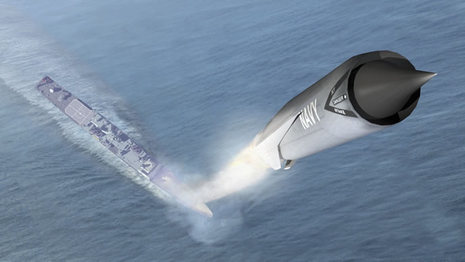
In this context, the US Navy in 2009 asked the Defense Advanced Research Project Agency (DARPA) to support its effort to speedily develop a next-generation stand-off anti-ship weapons system. As current systems, such as the Harpoon RGM-84, are ageing and may not meet future requirements in terms of range, lethality and resistance against defensive measures, the US Navy and DARPA established the Long-Range Anti-Ship Missile (LRASM) programme. Within the framework of this programme, two different missile solutions will be developed and have to demonstrate their worth to be quickly introduced into service with the US Navy’s vessels.
PHASE 2 – DEMONSTRATION OF BOTH MISSILE VARIANTS
Having successfully completed Phase 1, which resulted in two preliminary system designs that will be further explored, DARPA has recently awarded contracts to Lockheed Martin for the programme’s next phase. As Lockheed Martin announced yesterday, it received two contracts worth $218 million for the demonstration of the LRASM-A and LRASM-B concepts. The second phase of the programme aims at achieving successful flight demonstrations of tactically relevant prototypes of both missiles.
Lockheed Martin’s Missiles and Fire Control Strike Weapons division received a $60.3 million contract for two air-launched demonstrations of the LRASM-A, which is largely based on the company’s experience with the Joint Air to Surface Standoff Missile Extended Range (JASSM-ER) airframe. Further, under a $157.7 million contract, the Missile and Fire Control Tactical Missiles division will demonstrate the LRASM-B prototype, comprising four Vertical Launch System (VLS) launches. According to DARPA, the LRASM-B leverages Lockheed Martin’s prior ramjet development activities and a suite of supporting sensors and avionics. It is expected to provide a “supersonic cruise missile with balanced speed and stealth for robust performance.”
Despite being matched with the VLS, used on the US Navy’s destroyers and cruisers to launch state-of-the-art surface-to-air and surface-to-surface missiles (SAM/SSM), both missile solutions are also designed to be launched by aircraft. Thus, it will replace the air-launched Harpoon variant (AGM-84), which is deployed by various fixed-wing aircraft in the US inventory.
BAE Systems will provide a common sensor system for all missile variants. In addition to multiple sensors, allowing the missile to autonomously select targets even in a cluttered sea lane and in a GPS-denied environment, AviationWeek predicts that the core of the sensor suite will be based on passive radio-frequency technology.
Rick Edwards, vice president of Tactical Missiles and Combat Maneuver Systems at Lockheed Martin Missiles and Fire Control, explained: “Both of our LRASM solutions will deliver extraordinary range, willful penetration of ship self-defense systems and precise lethality in denied combat environments.”
“The maturity of these weapons and technologies allows near-term transition to Navy magazines at an affordable price. These are low risk, practical options with the Navy initiating studies of anti-surface warfare capability,” Edwards continued.
A CHALLENGING UNDERTAKING – TIME, CAPABILITIES, TECHNOLOGY
As its current anti-ship capabilities are limited in the face of today’s potential conventional threats, the Navy is anxious to introduce its next-generation anti-ship missile system as soon as possible. As yet, this is expected to be achieved as early as 2013. However, many challenges remain before a truly operational system will be available.
The Navy made high demands with regard to the systems’ capabilities. Currently deployed systems require a considerable amount of planning, as well as reliable data and precision guidance, to successfully strike their targets. Thus, the Navy needs a solution that allows its vessels to engage targets well outside their striking range while also providing a significantly increased flexibility and independence.
When the programme was initiated in 2009, Rob McHenry, programme manager in DARPA’s Tactical Technology Office, summarised the requirements as follows: “Once the missile flies that far, it has a requirement to be able to independently detect and validate the target that it was shot at. Once it finds that target, then it has to be able to penetrate the air defenses. The standard of maritime integrated air defenses has risen dramatically over the past few years.”
----
By Nicolas von Kospoth, Managing Editor
View the original article here

US wins $145m Kuwait missile order

on Tuesday, February 15, 2011


US-based Raytheon Company said it has received a $145 million foreign military sales production contract for Patriot guidance enhanced missiles – Tactical (GEM-T) to augment Kuwait's air and missile defence.
The US Army Aviation and Missile Command, Redstone Arsenal, Alaska, issued the contract to complement Kuwait's Configuration-3 radar system upgrade work already underway at Raytheon.
'The GEM-T missile production contract highlights the efforts by Kuwait Air Defence to maintain readiness and effectiveness of the Patriot Air and Missile System to counter evolving regional threats,' said Sanjay Kapoor, vice president of Patriot Programs at Raytheon Integrated Defense Systems (IDS).
'We continue to modernize the Patriot system and are committed to providing Kuwait and our 11 other partner nations globally with increased system reliability and reduced life-cycle costs,' he added.
The work under this contract will be performed by Raytheon IDS at the Integrated Air Defense Center in Andover, Massachusetts.
Raytheon IDS is the prime contractor for both domestic and international Patriot Air and Missile Defense Systems and is the system integrator for Patriot Advanced Capability-3 missiles
View the original article here