Showing posts with label Receives. Show all posts

Bell Helicopter Receives Orders from Indonesia

on Saturday, December 3, 2011

02 Desember 2011


Bell 412 of the Indonesian Army Aviation (photo : Detik)

FORT WORTH, TEXAS – Bell Helicopter, a Textron Inc. company (NYSE: TXT), announced today it has received five firm orders with two potential follow-on orders for Bell 412s from PT Dirgantara Indonesia (PTDI) for delivery to government agencies in Indonesia.

"Bell Helicopter has had a long partnership with PTDI in Indonesia," said Larry D. Roberts, senior vice president, Bell Helicopter’s Commercial Business.

“The sale of these helicopters is part of the framework of an ongoing industrial collaboration between our two companies," Roberts said. "We believe our partnership will continue to grow and possibly expand in the future."

The five Bell 412s are expected to be delivered to PTDI by the end of the year. PTDI will then transport them to Bandung, Indonesia, where local content and customer specific mission equipment will be added prior to PTDI making final delivery to end-users.

In 2010, Bell Helicopter announced plans to extend the capability and performance of the Bell 412EP through a series of upgrades which are expected to be available to customers in 2012.

"The Bell 412 has had tremendous success in the region. It is well-known throughout the world for its reliability and multi-mission capabilities. We are committed to continuing to invest in the Bell 412 and will evolve it based on customer feedback and mission requirements," Roberts said.

The upgrade program entails a Supplemental Type Certificate (STC) project that is intended to extend the wide range of missions that can be performed by the Bell 412EP consisting of an engine and flight deck upgrade, which will be available in 3-axis and 4-axis options.

The engine upgrade, in partnership with Pratt & Whitney Inc., is designed to provide a 15 percent engine SHP increase, improved OEI and hot/high performance and introduction of electronic engine control. The upgrade will yield a 10-12 percent increase in CAT A/PC1 & PC2 performance, increased hot/high capability and provides a path for a future upgrade for increased range and payload.

The flight deck upgrade will provide a modern glass flight deck – leveraging the well-received glass flight deck in the new Bell 429 – by utilizing hardware common to that aircraft, specifically display units. This will provide commonality in the cockpits of Bell Helicopter’s light twin and medium twin aircraft, simplifying pilot familiarity and maintenance training.

The planned engine and flight deck upgrades are in addition to an earlier Bell 412EP STC for the BLR FastFin™ System. The FastFin™ upgrade, certified by Transport Canada and the Federal Aviation Administration and available today, increases HOGE and HIGE performance limits and expands the lifting capacity of the Bell 412EP, providing more tail rotor reserve authority, improving hover stability, high/hot performance, crosswind capabilities, and payload, while reducing pilot workload and lowering operating costs through fuel savings.

Earlier this year, Bell Helicopter broke ground on a new Maintenance, Repair and Overhaul (MRO) facility in Singapore's Seletar Aerospace Park dedicated to customer support and service for the Asia-Pacific region. The new facility, which Bell Helicopter will operate in partnership with Cessna, will replace and augment the existing Bell Helicopter Supply Center and strengthen the company's sales presence in the Asia Pacific region, as well as add parts distribution and maintenance capabilities for Cessna operators in the region.

"Bell Helicopter is focused on continually improving the customer experience and remains committed to transforming the model for commercial aviation aircraft support – finding innovative ways of supporting our customers around the world and leading the way in new and emerging markets," said R. Danny Maldonado, senior vice president, Bell Helicopter's Customer Support and Chief Services Officer.

"With more than 6,000 helicopters flying in more than 12 countries, Asia Pacific has the second largest fleet of aircraft in the world. Adding this new service center is one way we are demonstrating that commitment to our customers throughout the Asia Pacific region," Maldonado said.

The Bell 412 is backed by Bell Helicopter's industry-leading customer support and service that has earned it – voted by our customers – the #1 ranking in Professional Pilot magazine for 17 consecutive years as well as #1 in Aviation International News for a sixth consecutive time.


View the Original article
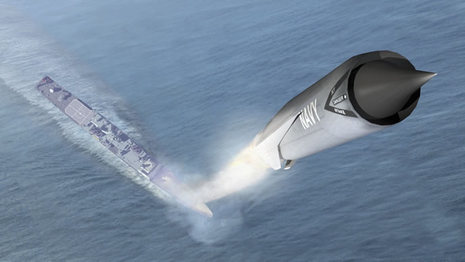
Lockheed Martin Receives Contracts Worth $218 Million for Demonstration of Second Round in Future US LRASM Anti-Ship Missile Programme

on Wednesday, February 16, 2011


Despite the currently improving ties between the US and China, it can be expected that China will be the determining factor in US military development during the foreseeable future.
As those military operations, which urged western Armed Forces to refocus on so-called asymmetric warfare, are being considered more or less under control and probably achievable in a rather predictable time frame, other potential conflict areas that had been neglected during the past decade begin to slide back to the centre of attention. As if awakening from a nightmare of dirty wars in dusty countries, recently increased tensions on the Korean Peninsula and China’s military build-up have urged the US military leadership and defence analysts to rediscover the necessities of conventional warfare in order to sustain the United States’ superpower status in the future.*
China is very much helping to cement this reasoning: The J-20 fifth-generation fighter aircraft made its maiden flight while US Defense Secretary Gates was in the country, and reports of China’s tangible efforts to build an aircraft carrier emerged just as Chinese President Hu Jintao prepared to meet Barack Obama in Washington ... coincidences? Further, reports of an ominous Chinese anti-ship missile, capable of sinking US aircraft carriers, spooked through the media during the past months.
In this context, the US Navy in 2009 asked the Defense Advanced Research Project Agency (DARPA) to support its effort to speedily develop a next-generation stand-off anti-ship weapons system. As current systems, such as the Harpoon RGM-84, are ageing and may not meet future requirements in terms of range, lethality and resistance against defensive measures, the US Navy and DARPA established the Long-Range Anti-Ship Missile (LRASM) programme. Within the framework of this programme, two different missile solutions will be developed and have to demonstrate their worth to be quickly introduced into service with the US Navy’s vessels.
PHASE 2 – DEMONSTRATION OF BOTH MISSILE VARIANTS
Having successfully completed Phase 1, which resulted in two preliminary system designs that will be further explored, DARPA has recently awarded contracts to Lockheed Martin for the programme’s next phase. As Lockheed Martin announced yesterday, it received two contracts worth $218 million for the demonstration of the LRASM-A and LRASM-B concepts. The second phase of the programme aims at achieving successful flight demonstrations of tactically relevant prototypes of both missiles.
Lockheed Martin’s Missiles and Fire Control Strike Weapons division received a $60.3 million contract for two air-launched demonstrations of the LRASM-A, which is largely based on the company’s experience with the Joint Air to Surface Standoff Missile Extended Range (JASSM-ER) airframe. Further, under a $157.7 million contract, the Missile and Fire Control Tactical Missiles division will demonstrate the LRASM-B prototype, comprising four Vertical Launch System (VLS) launches. According to DARPA, the LRASM-B leverages Lockheed Martin’s prior ramjet development activities and a suite of supporting sensors and avionics. It is expected to provide a “supersonic cruise missile with balanced speed and stealth for robust performance.”
Despite being matched with the VLS, used on the US Navy’s destroyers and cruisers to launch state-of-the-art surface-to-air and surface-to-surface missiles (SAM/SSM), both missile solutions are also designed to be launched by aircraft. Thus, it will replace the air-launched Harpoon variant (AGM-84), which is deployed by various fixed-wing aircraft in the US inventory.
BAE Systems will provide a common sensor system for all missile variants. In addition to multiple sensors, allowing the missile to autonomously select targets even in a cluttered sea lane and in a GPS-denied environment, AviationWeek predicts that the core of the sensor suite will be based on passive radio-frequency technology.
Rick Edwards, vice president of Tactical Missiles and Combat Maneuver Systems at Lockheed Martin Missiles and Fire Control, explained: “Both of our LRASM solutions will deliver extraordinary range, willful penetration of ship self-defense systems and precise lethality in denied combat environments.”
“The maturity of these weapons and technologies allows near-term transition to Navy magazines at an affordable price. These are low risk, practical options with the Navy initiating studies of anti-surface warfare capability,” Edwards continued.
A CHALLENGING UNDERTAKING – TIME, CAPABILITIES, TECHNOLOGY
As its current anti-ship capabilities are limited in the face of today’s potential conventional threats, the Navy is anxious to introduce its next-generation anti-ship missile system as soon as possible. As yet, this is expected to be achieved as early as 2013. However, many challenges remain before a truly operational system will be available.
The Navy made high demands with regard to the systems’ capabilities. Currently deployed systems require a considerable amount of planning, as well as reliable data and precision guidance, to successfully strike their targets. Thus, the Navy needs a solution that allows its vessels to engage targets well outside their striking range while also providing a significantly increased flexibility and independence.
When the programme was initiated in 2009, Rob McHenry, programme manager in DARPA’s Tactical Technology Office, summarised the requirements as follows: “Once the missile flies that far, it has a requirement to be able to independently detect and validate the target that it was shot at. Once it finds that target, then it has to be able to penetrate the air defenses. The standard of maritime integrated air defenses has risen dramatically over the past few years.”
----
By Nicolas von Kospoth, Managing Editor
View the original article here